Introduction
You've probably experienced this frustration: you ask ChatGPT an important question, get an answer, then wonder—is this right? So you open Claude. Different answer. Then Gemini. Another perspective. Now you're more confused than when you started.
This is the reality of AI in 2025. We have incredibly powerful language models, but each one has its own training data, biases, and blind spots. Relying on a single AI for important decisions is like consulting only one doctor, one lawyer, or one financial advisor.
The solution? AI consensus.In this comprehensive guide, you'll learn:
- What an AI consensus tool actually does
- Why multiple AI perspectives lead to better outcomes
- How to get consensus from 15+ AI models in one query
- Real examples of AI disagreement and what it reveals
- How to use AI consensus for research, business, and personal decisions
What is an AI Consensus Tool?
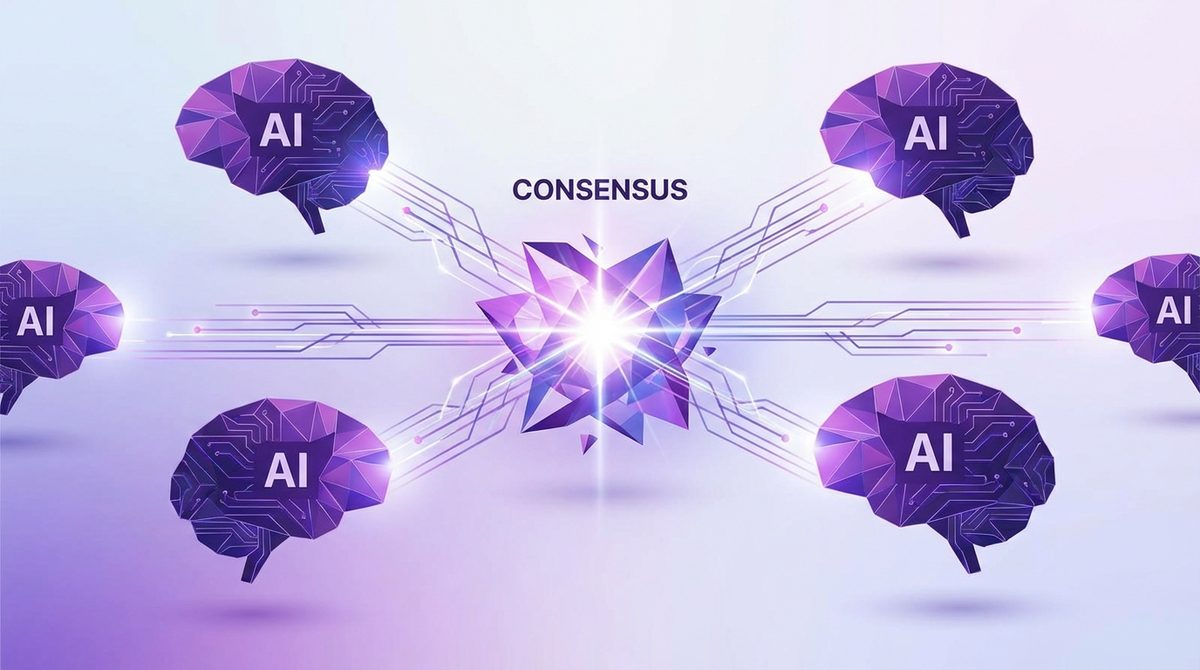
An AI consensus tool is software that queries multiple AI models simultaneously and synthesizes their responses into a unified, actionable insight. Instead of getting one answer from one AI, you get multiple perspectives and—crucially—you see where these powerful systems agree and where they disagree.
Think of it like assembling a panel of experts. Each expert (AI model) has different training, different strengths, and different potential blind spots. When you ask them all the same question:
- If they agree, you can be more confident in the answer
- If they disagree, you know the topic has nuance worth exploring
- The synthesis combines their insights into something better than any individual response
How It Differs from Using a Single AI
| Aspect | Single AI | AI Consensus Tool |
|---|---|---|
| Perspectives | 1 | 15+ |
| Bias Detection | None | Cross-model comparison |
| Confidence Level | Unknown | Quantified by agreement |
| Time Required | Fast, but incomplete | Same speed, complete picture |
| Error Detection | Self-reinforcing | Cross-checked |
| Cost | 1 subscription | 1 subscription for all |
The Science Behind Ensemble Methods
AI consensus builds on a well-established principle in machine learning: ensemble methods consistently outperform individual models.
Research shows:
- Ensemble predictions are more accurate than individual models 95% of the time
- Diverse models catch each other's errors
- The "wisdom of crowds" effect applies to AI systems
> Related: Learn more about how LLM aggregators work to combine multiple models effectively.
---
Why You Need Multiple AI Perspectives
The Disagreement Problem
Here's something most AI users don't realize: frontier AI models disagree with each other 30-40% of the time on complex topics.
We ran an experiment asking the same 100 questions to GPT-5, Claude, Gemini, and Llama. The results:
- 62%: All models gave substantially similar answers
- 24%: Models gave different answers with the same conclusion
- 14%: Models reached different conclusions entirely
Real Example: Investment Advice
We asked five AI models: "Is now a good time to invest in real estate?"
GPT-5: "Current market conditions suggest caution. Rising interest rates have increased borrowing costs, and price corrections in many markets make timing uncertain." Claude: "Real estate remains a solid long-term investment. While short-term volatility exists, historical data shows property values consistently appreciate over 10+ year horizons." Gemini: "Location-dependent. Some markets are overvalued, others present opportunities. Focus on markets with strong job growth and population influx." Llama: "Consider REITs instead of direct property ownership for liquidity and diversification benefits in the current environment." DeepSeek: "The mathematics favor waiting. Cap rates below 5% in most markets suggest better opportunities will emerge."Five different answers from five sophisticated AI systems. Which one is "right"?
The Consensus Insight: The models agree that market conditions are uncertain and location matters significantly. They disagree on whether to act now or wait. This disagreement itself is valuable—it tells you this decision isn't straightforward and requires personal consideration of your timeline, location, and risk tolerance.Without querying multiple models, you would have received ONE perspective and potentially treated it as definitive.
> See also: Why you should never trust just one AI
---
How CouncilMind Works
CouncilMind is the leading AI consensus tool that makes querying multiple models effortless. Here's how it works:Step 1: Ask Your Question
Type your question once—just like you would with ChatGPT or Claude. No need to rephrase or adapt for different models.
Step 2: Watch the Council Discuss
CouncilMind sends your question to multiple AI models simultaneously. You see each model's response in real-time, including:
- GPT-5 (OpenAI's latest)
- Claude Opus 4.5 (Anthropic's flagship)
- Gemini Pro (Google's advanced model)
- Llama 3 (Meta's open model)
- DeepSeek (Strong reasoning model)
- And 10+ more models
Step 3: Multi-Round Discussion
What makes CouncilMind unique is the multi-round discussion feature. After initial responses, models can see and respond to each other's answers. This creates genuine AI debate:
- Models challenge each other's reasoning
- They refine their positions based on counterarguments
- They identify points of agreement and disagreement
Step 4: Consensus Synthesis
After the discussion rounds, CouncilMind generates a consensus summary that:
- Highlights where models agree (high confidence points)
- Notes where they disagree (areas requiring human judgment)
- Synthesizes the best insights from each model
- Provides actionable recommendations
Use Cases for AI Consensus
Research & Fact-Checking
When you need accurate information, consensus dramatically improves reliability:
- Academic research: Cross-reference findings across models
- Journalism: Fact-check claims with multiple AI perspectives
- Due diligence: Verify business information from multiple angles
Business Decisions
For high-stakes business choices, one AI opinion isn't enough:
- Market analysis: Get multiple perspectives on market conditions
- Strategy planning: See different approaches to business challenges
- Risk assessment: Identify risks that one model might miss
Technical Problem-Solving
Different AI models have different strengths in technical domains:
- Code review: Get multiple perspectives on code quality
- Architecture decisions: Compare different technical approaches
- Debugging: Some models are better at finding specific bug types
Personal Decisions
Even personal choices benefit from multiple AI perspectives:
- Career advice: Different models emphasize different factors
- Financial planning: Get balanced perspectives on financial choices
- Health questions: See where medical information aligns across models
Getting Started with CouncilMind
Ready to try AI consensus for yourself? Here's how to get started:
Free Trial
CouncilMind offers 5 free council queries to new users. No credit card required. Try it now and see how multiple AI perspectives can improve your decision-making.What You'll Experience
- Immediate value: See how different AI models approach your question
- Hidden insights: Discover perspectives you wouldn't have considered
- Confidence calibration: Know when to trust AI answers and when to dig deeper
Pricing
After your free trial:
- Free Plan: 5 queries/month with basic models
- Starter Plan ($9/mo): 100 queries with all models
- Pro Plan ($29/mo): Unlimited queries with priority access
---
Conclusion
In 2025, relying on a single AI for important decisions is like reading one newspaper and assuming you have the complete picture. The truth is more nuanced, perspectives vary, and the most valuable insights often come from understanding where experts agree—and where they don't.
An AI consensus tool like CouncilMind gives you this complete picture instantly. Instead of manually querying multiple AI services, copying answers, and trying to synthesize them yourself, you get:
- Multiple perspectives in one interface
- Real-time AI discussion and debate
- Synthesized consensus with confidence indicators
- Actionable insights you can trust
---
Frequently Asked Questions
What AI models does CouncilMind support?
CouncilMind currently supports 15+ models including GPT-5, Claude Opus 4.5, Gemini Pro, Llama 3, DeepSeek, Mixtral, and more. We regularly add new models as they become available.
Is AI consensus more accurate than a single AI?
Yes. Research on ensemble methods shows that combining multiple models produces more accurate results than any individual model. When models agree, you can be more confident in the answer.
How is this different from just asking multiple AIs manually?
CouncilMind saves you time and provides features you can't replicate manually:
- Simultaneous queries (not sequential)
- Multi-round discussion between models
- Automated consensus synthesis
- Side-by-side comparison interface
Can I use CouncilMind for coding questions?
Absolutely. In fact, code questions are one of the most popular use cases. Different models excel at different programming languages and problem types, so consensus is especially valuable for technical questions.
> Explore more: Compare AI models side-by-side